Home › Common Problems › Stamped Concrete Cracking
Stamped Concrete Cracking
in Asheville, NC
Stamped concrete cracks when the slab can't handle ground movement or drying shrinkage. In Asheville, the thick clay soil in areas like West Asheville and Kenilworth swells after rain and pulls away in dry spells, so the slab underneath your pattern is always fighting movement. Left alone, a hairline crack turns into a gap that holds water, freezes in January, and eventually lifts the slab.
Asheville Stamped Concrete Pros helps Asheville, NC homeowners fix stamped concrete cracking — call for a free inspection.
Quick Answer
Stamped concrete cracks when the ground underneath moves or the slab wasn't cut with control joints during the pour. In Asheville, the heavy clay soil swells when wet and shrinks when dry, and that constant movement breaks slabs apart. A contractor needs to grind out the crack, fill it with a flexible polyurethane filler, and seal the surface. Call for an inspection before winter freeze-thaw cycles push the crack wider.
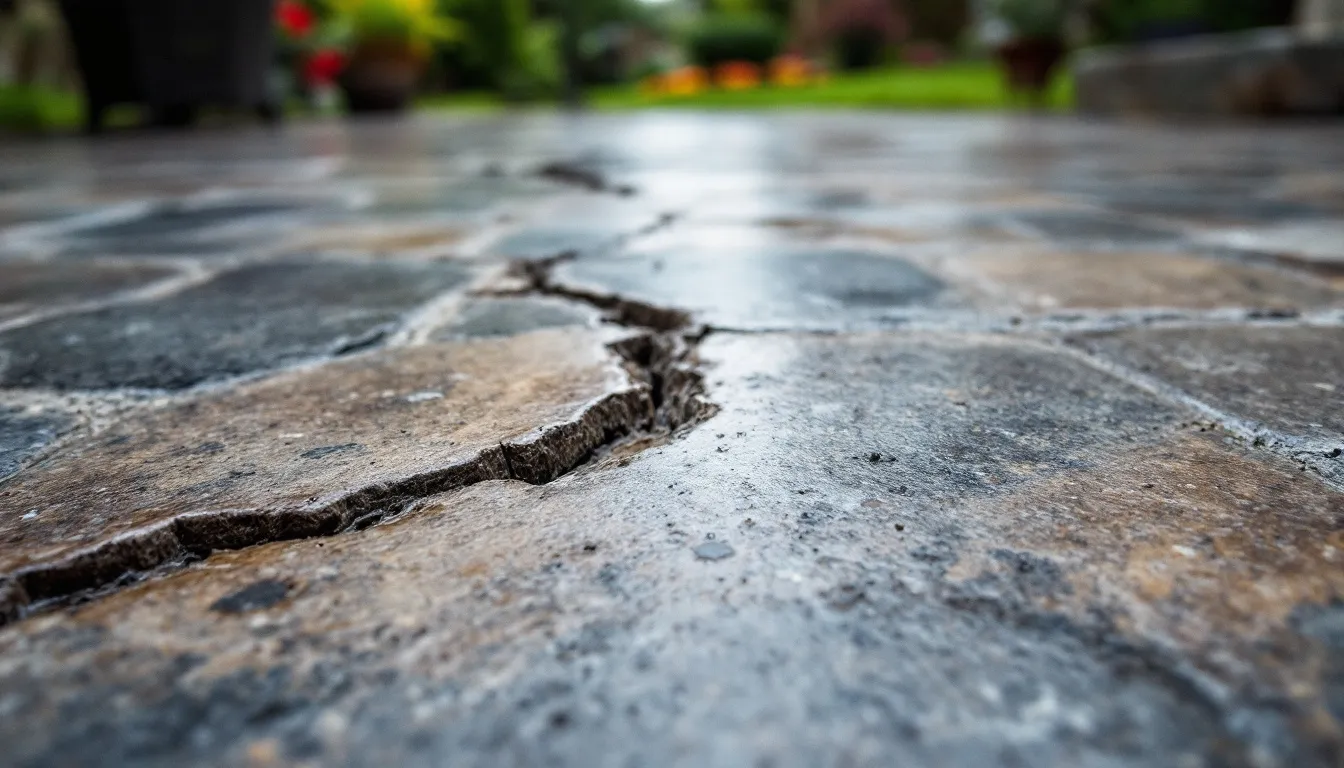
Telltale Signs
Warning Signs to Watch For
- Thin lines running across or along the stamped pattern
- Cracks that follow the grout lines of the stamp design
- A crack that is wider at one end than the other
- Small chunks of concrete breaking loose along a crack edge
- Water pooling inside a crack after rain
- The crack has grown visibly longer since you first noticed it
Root Causes
What Causes Stamped Concrete Cracking?
Shrinkage During Initial Cure
Fresh concrete loses water as it hardens and pulls in on itself. If control joints were not cut into the slab within the first day or two of the pour, the slab cracks wherever it feels like it, usually right through the middle of your stamped design.
The Fix
Control Joint Saw-Cutting and Filler
A contractor saws straight joints into the slab at the right spacing, then fills existing random cracks with a flexible polyurethane compound. The joints give the slab a planned place to move so future cracking stays hidden in a straight line.
Clay Soil Swelling and Shrinking
Asheville sits on heavy clay soil that absorbs rainwater and expands, then dries out and contracts. That ground movement puts the slab under stress from below, and over time the concrete breaks along its weakest points.
The Fix
Sub-base Repair and Slab Stabilization
The damaged section is removed, the clay base is compacted and topped with crushed gravel to reduce movement, and a new section is poured with proper reinforcement. Gravel drains faster than clay so the ground stops heaving as much.
Freeze-Thaw Damage
Asheville temperatures drop below freezing on average around 70 nights a year. Water gets into small surface cracks, freezes, expands, and forces the crack open wider each winter until what started as a hairline becomes a gap you can fit a finger into.
The Fix
Crack Repair and Penetrating Sealer Application
Existing cracks are cleaned out and filled, then the whole surface gets a fresh coat of penetrating concrete sealer. The sealer slows water from getting into the slab and buys the concrete more years before freeze damage repeats.
Self-Diagnosis
Which Cause Applies to You?
Check the signs you're observing to narrow down the likely root cause before your inspection.
| What You're Seeing | Shrinkage During Initial Cure | Clay Soil Swelling and Shrinking | Freeze-Thaw Damage |
|---|---|---|---|
| Cracks appear in a random spiderweb pattern across the surface | |||
| Cracks run parallel to each other in long straight lines | |||
| One side of the crack sits higher than the other side | |||
| Cracks are wider and more numerous after a wet winter | |||
| Surface around the crack is flaking or spalling | |||
| Cracks appeared within the first few weeks after the pour |
Free Quote
Get a free quote in Asheville
No obligation — tell us what's going on and we'll text you back shortly.
Other Problems
Services That Fix This
Stamped Concrete Cracking Near You
Also Helpful